
P
Paola C.
Google Review
★★★★★
Porsche quoted me $5,000 for a brake job. I called Shawn, and over the phone, he gave me a price that was a fraction of that.
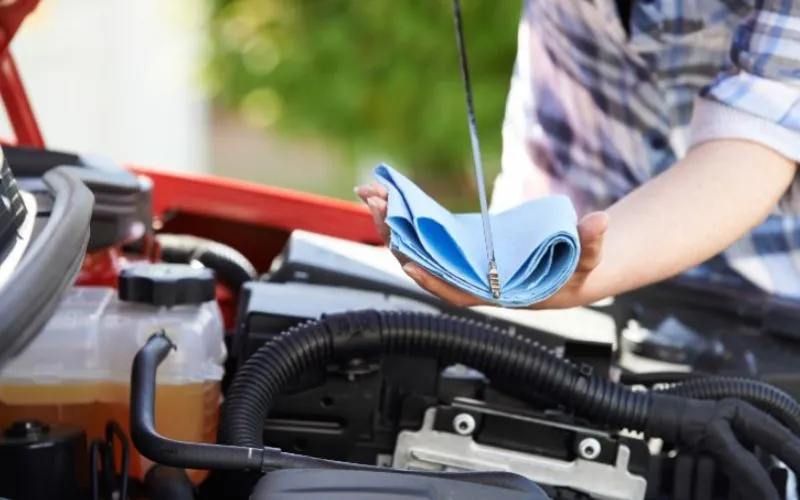
You’ve noticed oil drips on your driveway, a burning oil smell when you park, or maybe an oil pressure warning light just flickered on your dashboard. Oil leaking from your car is never something to shrug off, but the urgency depends on how fast it’s leaking and how low your oil level has dropped. If your BMW, Porsche, or Mercedes has an oil leak in Hermosa Beach, getting an engine oil leak diagnosis and oil leak repair early is the difference between a gasket replacement and a destroyed engine.
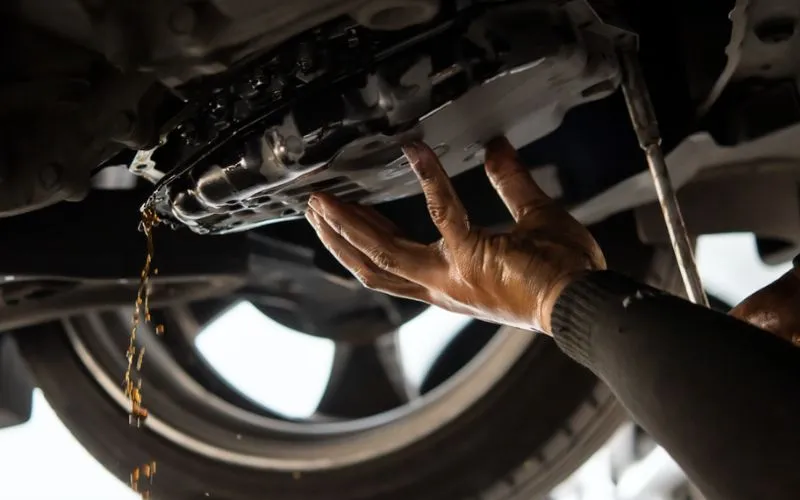
A small oil seep that leaves a few spots on your driveway isn’t an immediate emergency, but it’s not safe to ignore either. Any oil leak gets worse over time, never better. What starts as a minor seep becomes an active drip, then a steady leak.
The real question is how much oil you’re losing and how quickly.
If your oil level stays within the safe range on the dipstick and you’re only seeing small spots after the car sits overnight, you have some time to schedule a repair. Days to weeks, not months.
If the oil level is dropping noticeably between checks, if you’re adding oil every week or two, or if you see the oil pressure warning light, the situation is more urgent. At that point, you’re risking engine damage every time you drive.
The safest approach: check your oil level, note how fast it’s dropping, and get to a qualified shop sooner rather than later.
Engine oil does three critical jobs: it lubricates moving parts, it helps cool internal components, and it carries away debris and contaminants. When the oil level drops, all three functions suffer.
Phase 1: Increased friction. With less oil circulating, the thin film between moving metal parts gets thinner. Friction goes up. Wear accelerates. You might not notice anything yet, but the damage is happening at a microscopic level.
Phase 2: Heat buildup. Less oil means less heat transfer away from critical surfaces. Bearing surfaces and cylinder walls start running hotter than designed. On a turbocharged German engine that already runs at high temperatures, this phase happens faster than on a naturally aspirated domestic engine.
Phase 3: Scoring and metal damage. Bearing surfaces and cylinder walls develop visible damage. Metal particles enter the remaining oil, creating an abrasive slurry that accelerates destruction. At this point, even fixing the oil leak won’t undo the internal damage.
Phase 4: Seizure. Metal-on-metal contact without adequate lubrication generates enough heat to weld components together. The engine locks up. It’s done. You’re looking at an engine replacement.
German engines have tighter tolerances than most. The gap between “running fine” and “internal damage” is smaller, which means they suffer from low oil faster than a truck engine with generous clearances.

Not all oil leaks are equally dangerous. Here’s how to gauge the severity:
Stop driving immediately if: The oil pressure warning light comes on while driving. This means oil pressure has dropped to a dangerous level. Pull over safely and shut the engine off. Don’t restart it. Call a tow truck. Driving even a mile with no oil pressure can destroy an engine.
Get to a shop today if: You see a visible stream or a large puddle (bigger than a dinner plate) under the car. The oil level on the dipstick is at or below the minimum mark. You smell burning oil strongly from inside the cabin.
Schedule a repair this week if: The oil level is dropping noticeably between checks (more than half a quart per 1,000 miles). You’re seeing consistent drip spots on your driveway. The leak is visible on the engine when you open the hood.
Monitor and schedule soon if: You see a few small spots where you park. The oil level barely changes between oil changes. The leak appears to be a slow seep rather than an active drip.
Even in the “monitor” category, don’t let it slide for months. Small leaks grow. And on German cars, a slow valve cover gasket seep can turn into oil dripping onto hot exhaust components, which creates a fire hazard.
Beyond the obvious puddle under the car, there are several signs that an oil leak has gone from minor to dangerous:
Burning oil smell. If you can smell burning oil, especially after driving, oil is hitting a hot surface somewhere. This usually means oil is dripping onto the exhaust manifold or turbo housing. It’s both a fire risk and a sign the leak is significant enough to reach those components.
Blue or gray smoke from the exhaust. This means oil is getting into the combustion chamber and burning with the fuel. It could be a gasket issue, worn valve seals, or oil being pulled into the intake. Any of these need attention.
Oil pressure light or low oil level warning. Your car’s computer doesn’t alert you until things are genuinely low. If you’re seeing these warnings, the leak has already removed a significant amount of oil from the system.
Engine running hotter than normal. Less oil means less cooling. If your temperature gauge is creeping up alongside an oil leak, the two problems are likely connected.
Visible oil coating on the underside of the engine. Pop the hood and look. If the bottom of the engine is wet and grimy with fresh oil, the leak is active and substantial.
Yes to both, and German car owners should take this seriously.
Fire risk. Engine oil dripping onto the exhaust manifold, catalytic converter, or turbocharger housing can ignite. The exhaust manifold on a running engine reaches 600-1,000 degrees Fahrenheit. Oil’s flash point is around 400-500 degrees. The math is simple. Turbocharged BMWs and Porsches are especially vulnerable because the turbo sits close to oil lines and gets extremely hot.
Overheating. Engine oil carries heat away from critical components. When the oil level drops, the remaining oil works harder, gets hotter, and breaks down faster. This creates a cycle: the leak reduces oil volume, the remaining oil overheats, overheated oil loses viscosity and lubricating ability, and engine temperatures climb. On a German car already engineered to run at higher operating temperatures, this cycle progresses quickly.
Both scenarios are preventable with early oil leak repair. A leaking gasket that costs $300-$600 to fix is a lot cheaper than a fire or an engine replacement.
German cars have some well-known oil leak sources, and understanding them helps you recognize what you’re dealing with.
Valve cover gasket. The single most common oil leak on German engines. The gasket sits between the valve cover and the cylinder head, and it dries out and cracks over time. On BMW inline-six engines, this is practically a scheduled maintenance item after 60,000-80,000 miles. You’ll see oil seeping down the side of the engine.
Oil filter housing gasket. This is a BMW specialty. The oil filter housing uses a rubber gasket that hardens with age and heat cycling. When it fails, oil leaks from the filter housing area. It’s a relatively affordable repair if caught early.
Oil pan gasket. The gasket between the oil pan and the engine block. On German cars, the oil pan is often aluminum, and the mating surfaces can corrode over time. This leak shows up as drips from the very bottom of the engine.
Rear main seal. The seal where the crankshaft exits the back of the engine. This is a more expensive repair because accessing the seal requires removing the transmission. It’s less common than the other leaks but not unusual on higher-mileage German cars.
Turbo oil lines. Turbocharged engines have oil feed and return lines to the turbocharger. The fittings and seals on these lines can leak, and because they’re near the hottest parts of the engine, even a small leak is a fire concern.
The cost gap between early repair and delayed repair is enormous.
Caught early (gasket or seal replacement): $200-$800 depending on the location. A valve cover gasket on most BMWs runs $400-$600 for parts and labor. An oil filter housing gasket is typically $300-$500.
Delayed (engine damage from oil starvation): $1,500-$3,000. At this point, bearings are damaged, scoring has occurred, and the engine needs internal work beyond just fixing the leak.
Catastrophic (engine replacement): $5,000-$10,000 or more on a German car. A rebuilt or used engine plus the labor to swap it. On some models, this exceeds the value of the car.
The pattern is the same as every other repair: the longer you wait, the more it costs. A $400 valve cover gasket repair turns into a $7,000 engine replacement because someone decided to “just keep an eye on it” for six months.
At Luxury Motors of South Bay, we diagnose oil leaks by cleaning the engine, running it, and pinpointing exactly where the oil is coming from. No guessing, no replacing three gaskets hoping one of them is the right one. We find the source, fix it, and you’re done.
Seeing oil spots where you park? Don’t wait until it’s an emergency. Call Luxury Motors of South Bay at 310-504-0089 or stop by 505 Pacific Coast Hwy, Hermosa Beach, CA 90254. We’ll find the leak and give you a straight answer on what it’ll take to fix it.
240 five-star Google reviews. 20,000+ vehicles serviced. Zero negative reviews.
Porsche quoted me $5,000 for a brake job. I called Shawn, and over the phone, he gave me a price that was a fraction of that.
I recently brought my 2004 Porsche 911 Turbo… What I appreciated most was their honesty; they provided a 25-point inspection… It is rare to find a shop that treats both the customer and the car with this much respect.
I have a Porsche 911 and I am very selective on who I have work on my car. Expert level knowledge on luxury cars.
The dealership claimed it was just a battery issue. When the problem persisted, I turned to Luxury Motors of South Bay and they quickly identified and resolved the actual issue with precision.
These dudes know what they’re doing. I took my Audi in and they treated it like it was their own. Straightforward, honest…
Luxury Motors of South Bay serves the South Bay from our shop at 505 Pacific Coast Hwy, Hermosa Beach, CA 90254.
Bring your vehicle in for a no-pressure inspection. Shawn Baker, ASE Certified Master Technician with over 20 years of experience, leads every diagnosis. You’ll get photos, honest findings, and a clear estimate. No surprises, no upselling.
240 five-star Google reviews from real South Bay drivers. That’s not a tagline. It’s a track record.