

P
Paola C.
Google Review
★★★★★
Porsche quoted me $5,000 for a brake job. I called Shawn, and over the phone, he gave me a price that was a fraction of that.
Meta Title: Audi Oil Leak Repair in Hermosa Beach, CA | Luxury Motors of South Bay
Meta Description: Audi oil leak diagnosis and repair in Hermosa Beach. Valve cover gaskets, PCV system, turbo oil lines, timing cover seals. ASE Master Tech. 310-504-0089.
URL: /oil-leak-repair/audi-oil-leak-repair/
Oil spots on your driveway, a burning oil smell after you park, low oil level warnings between service intervals. Luxury Motors of South Bay provides Audi oil leak diagnosis and gasket replacement in Hermosa Beach, CA, stopping leaks before they damage your engine or turbocharger. Whether you drive an A4, A6, Q5, or Q7 with a TFSI engine, we trace the source, fix the seal, and get you back to driving with a clean engine bay and peace of mind.
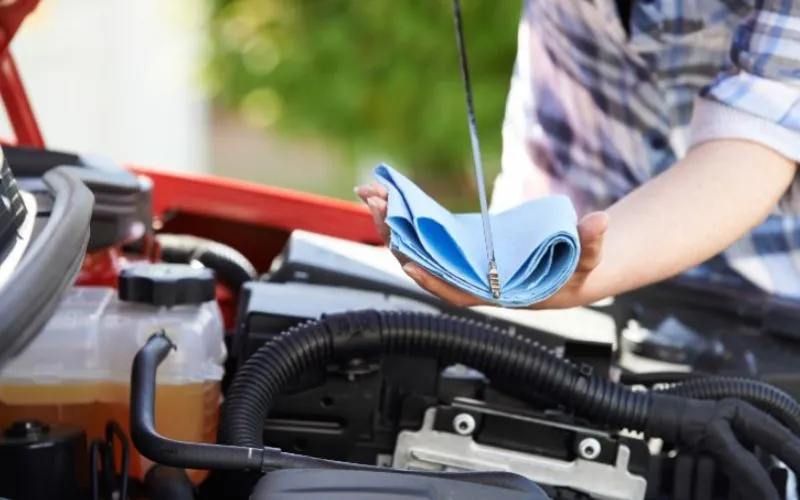
The most common Audi oil leak sources are the valve cover gasket, oil filter housing seals, and PCV system failures. Heat cycling hardens rubber seals over time, and turbocharged Audi engines generate extra crankcase pressure that accelerates leaks.
Audi’s turbocharged TFSI engines run hotter than naturally aspirated engines. The turbocharger itself adds heat to the top of the engine bay, and the intercooler plumbing reduces airflow around components that need cooling. Every time you drive and the engine heats up, then park and it cools down, those seals expand and contract. After thousands of cycles, the rubber loses elasticity.
The EA888 engine, found in the A4, A6, Q5, and many other Audi models, is especially susceptible. Its compact design packs components tightly together, which is great for performance but limits airflow around seals and gaskets. The EA113 engine in older models has its own patterns, particularly around the cam tensioner seal and upper timing cover.
Direct injection adds another layer. TFSI engines produce more crankcase blowby than port-injected engines. That blowby carries oil vapor and builds pressure inside the crankcase. When the PCV system can’t keep up (and it eventually can’t), that pressure pushes oil past any seal that’s starting to weaken.
Southern California heat makes all of this worse. Underhood temperatures on a 90-degree day in Hermosa Beach with stop-and-go traffic are significantly higher than what engineers in Ingolstadt might have benchmarked for. The result: seals that might last 100,000 miles in cooler climates fail earlier here.
The signs range from subtle to impossible to ignore. Catching the subtle ones early saves money.
Oil spots on the driveway. Check where you park. Fresh engine oil is amber to dark brown. Transmission fluid is typically reddish. If you see dark spots that weren’t there before, something’s leaking. The size of the spot tells you how fast.
Burning oil smell after parking. This is one of the most reliable early indicators. When oil leaks from the valve cover or oil filter housing, it drips onto the hot exhaust manifold or turbo heat shield. You won’t smell it while driving with the windows up. But after you park and walk around the car, it’s unmistakable. Acrid, sharp, nothing like exhaust fumes.
Low oil level between services. Audi’s oil monitoring system will warn you when levels drop. If you’re topping off between changes, that oil is going somewhere. External leaks leave spots. Internal consumption produces blue-tinged exhaust smoke. Either way, it needs diagnosis.
Smoke from the engine bay. Oil pooling on the exhaust or turbo housing produces visible smoke, especially noticeable on cool mornings when you start the engine. This is more than an annoyance. Oil on hot exhaust components is a fire hazard.
Oily film on engine components. Open the hood and look at the valve cover area. A leaking gasket leaves a wet, shiny residue along the edges that collects dust and road grime. It’s easy to spot once you know what to look for.
Check engine light. A secondary indicator. By the time the check engine light comes on for an oil-related issue, the leak has usually been developing for a while. Don’t wait for this one.

Audi oil leaks aren’t random. They follow predictable patterns based on engine design, mileage, and driving conditions. Here’s where they happen most often.
Valve cover gasket. The most common oil leak across all Audi models. The gasket seals the valve cover to the cylinder head at the top of the engine. Heat hardens it, it shrinks, and oil seeps down both sides of the engine. On four-cylinder TFSI engines, the valve cover is relatively accessible. On V6 and V8 models, there are two valve covers with more limited access.
Oil filter housing and cooler seals. Extremely common on A4, A6, and Q5 models. The oil cooler assembly bolts to the engine block and has multiple seals and O-rings that deteriorate with age. When these fail, oil can drip onto the serpentine belt and alternator below, causing secondary damage that multiplies the repair cost.
Timing chain cover seals. Particularly common on EA888 engines. The timing chain cover sits at the front of the engine and uses a combination of gaskets and sealant. When this seal fails, oil migrates across the front of the engine and can be difficult to trace to its origin without a thorough degrease and inspection.
Cam tensioner seal. Located at the top rear of the engine on many Audi four-cylinders. The hydraulic cam chain tensioner has a small seal that weeps oil. It’s a relatively inexpensive part, but the leak can mimic a valve cover gasket failure because of where the oil travels.
Turbocharger feed and return lines. TFSI engines have oil lines that feed the turbocharger bearings and return oil to the sump. These lines use banjo washers (crush washers) at their connection points. Over time and heat cycles, these washers lose their seal. Oil leaks from turbo lines can starve the turbo of lubrication, leading to bearing failure. This is one of the more urgent leaks to address.
Front and rear crankshaft seals. The front seal sits behind the harmonic balancer. The rear seal sits where the crankshaft meets the transmission. Both are high-mileage failure items, typically showing up past 80,000 miles. Rear main seal replacement requires transmission removal.
Oil pan gasket and drain plug. The oil pan sits at the bottom of the engine. The gasket can fail from age, and the drain plug can leak if overtightened or if the sealing washer isn’t replaced at each oil change. Road debris impact can also damage the oil pan itself.
Not every oil leak demands an immediate repair. Understanding the difference between seepage and an active leak helps you make smart decisions.
Seepage looks like a damp, oily film on the outside of a gasket surface. No drips. No spots on the ground. This is the earliest stage of gasket failure, and it’s extremely common on Audi engines past 60,000 miles. Seepage can be monitored at your next service visit. It’s not an emergency.
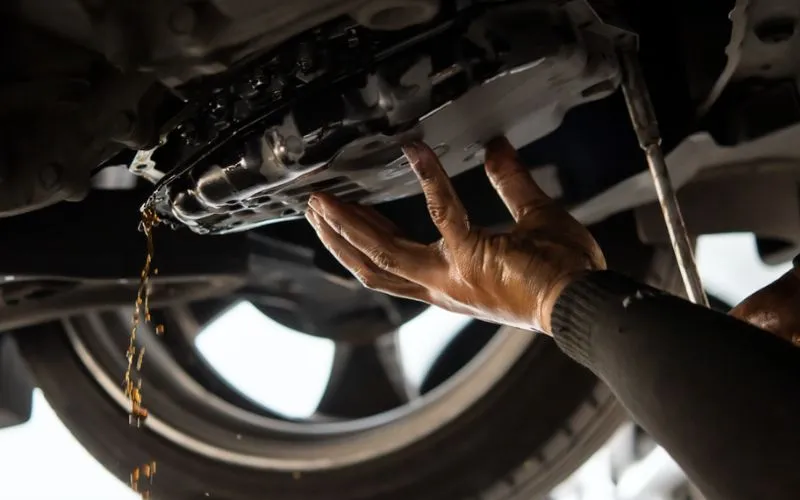
An active drip means oil is collecting and falling from the engine. You’ll see spots on the ground after the car sits. This stage needs attention soon. The leak will only get worse, and the oil is likely contacting other components (belts, hoses, wiring) as it drips.
A steady stream or puddle means the seal has failed significantly. Stop driving. Continuing to drive with a substantial leak risks engine damage from low oil levels and fire from oil on exhaust components. Call us and we’ll get you in.
During our inspections, we classify every leak by severity and location. If something is a minor seep that can safely wait, we tell you. We don’t upgrade a seep into an emergency to sell a repair. Over 50 of our 240 Google reviews mention our honesty and refusal to upsell, and that reputation matters to us.
This is one of the most misunderstood aspects of Audi oil leaks, and it’s the reason many Audi owners end up with repeat leak repairs.
The PCV system (positive crankcase ventilation) is a network of hoses, valves, and a diaphragm that routes combustion blowby gases from the crankcase back into the intake to be burned. It also maintains a slight vacuum inside the crankcase, which helps keep oil seals seated.
When the PCV valve or diaphragm fails, that vacuum disappears. In some cases, pressure actually builds inside the crankcase. That positive pressure pushes oil outward against every seal and gasket in the engine. A perfectly good valve cover gasket can start leaking simply because the PCV system is creating pressure it was never designed to handle.
Here’s where the repeat-repair trap happens: a shop replaces the leaking valve cover gasket but doesn’t test or address the failed PCV system. The new gasket holds for a few months, then starts leaking again because the root cause was never fixed. The owner pays twice for the same symptom.
We test PCV system function on every Audi oil leak diagnosis using a crankcase vacuum gauge. If the system isn’t holding proper vacuum, we address it as part of the repair. Fix the cause, not just the symptom.
On EA888 engines, the PCV valve is integrated into the valve cover assembly itself. That means a PCV failure often requires a complete valve cover replacement rather than just a gasket. It’s important to know this upfront so the estimate is accurate.
Shawn Baker, our ASE Master Technician, has worked on over 20,000 vehicles in a 20-year career. Audis are a significant portion of what comes through our shop. Here’s how we approach an oil leak diagnosis.
Step 1: Symptom discussion and visual inspection. We ask questions. When did you notice the spots? How fast is oil consumption increasing? Any smells? Then we inspect the engine cold and note every area with oil residue.
Step 2: Engine degrease. Oil travels. A leak at the valve cover can coat everything below it and make it look like six different things are leaking. We degrease the engine exterior to create a clean starting point.
Step 3: Dealer-level diagnostic scan. We use the same scan tools Audi dealerships use. This identifies PCV-related fault codes, oil pressure issues, and any related engine management faults that could be connected to the leak.
Step 4: PCV system pressure test. We connect a crankcase vacuum gauge and verify the PCV system is functioning correctly. If it’s not, we know the leak repair must include PCV correction or it won’t last.
Step 5: UV dye test (if needed). For leaks that aren’t visible after degreasing, we add fluorescent dye to the engine oil. After a drive cycle, the dye traces the exact path of the leak under UV light. No guessing.
Step 6: Detailed estimate with photos. We send you photos and a plain-language explanation of what’s leaking, why, and what the repair involves. No jargon. No pressure. If something can safely wait, we say so.
Step 7: Seal and gasket replacement. We use OEM-quality parts and follow Audi torque specifications. Sealing surfaces are cleaned properly. Crush washers are replaced. PCV issues are addressed simultaneously. We don’t take shortcuts that lead to comebacks.
Step 8: Quality check and test drive. After the repair, we run the engine, inspect for leaks, road test, and reinspect. The car goes back to you with a clean engine and verified repair.
The cost of Audi oil leak repair depends on the specific seal or gasket, the engine configuration, and how much disassembly is required.
A valve cover gasket on a four-cylinder A4 is less labor-intensive than the same repair on a V6 A6 or Q7. Turbo oil line repairs involve additional steps to ensure the turbocharger is properly lubricated after reassembly. Rear main seal replacement requires transmission removal, which adds significant labor time.
What stays consistent: our pricing is significantly below Audi dealership rates for the same diagnostic tools, the same procedures, and the same quality parts. You get independent shop value with dealer-level capability.
We provide a written estimate before any work begins. If we discover something additional during the repair (a cracked PCV hose behind the valve cover, a failing crush washer on a turbo oil line), we call you first. You authorize the work, or we button it back up. No surprises.
Affirm financing is available for larger repairs. Bilingual service in English and Spanish.
Luxury Motors of South Bay is located at 505 Pacific Coast Hwy, Hermosa Beach, CA 90254. We serve Audi owners throughout Torrance, Redondo Beach, Manhattan Beach, Hermosa Beach, Palos Verdes, Long Beach, San Pedro, and West Los Angeles. Bilingual service available in English and Spanish.
With 240 five-star Google reviews and an ASE Master Technician who’s worked on over 20,000 vehicles, we’re the Audi specialist South Bay counts on for oil leak repair and the full range of European auto repair.
240 five-star Google reviews. 20,000+ vehicles serviced. Zero negative reviews.
Porsche quoted me $5,000 for a brake job. I called Shawn, and over the phone, he gave me a price that was a fraction of that.
I recently brought my 2004 Porsche 911 Turbo… What I appreciated most was their honesty; they provided a 25-point inspection… It is rare to find a shop that treats both the customer and the car with this much respect.
I have a Porsche 911 and I am very selective on who I have work on my car. Expert level knowledge on luxury cars.
The dealership claimed it was just a battery issue. When the problem persisted, I turned to Luxury Motors of South Bay and they quickly identified and resolved the actual issue with precision.
These dudes know what they’re doing. I took my Audi in and they treated it like it was their own. Straightforward, honest…
Luxury Motors of South Bay serves the South Bay from our shop at 505 Pacific Coast Hwy, Hermosa Beach, CA 90254.

Bring your vehicle in for a no-pressure inspection. Shawn Baker, ASE Certified Master Technician with over 20 years of experience, leads every diagnosis. You’ll get photos, honest findings, and a clear estimate. No surprises, no upselling.
240 five-star Google reviews from real South Bay drivers. That’s not a tagline. It’s a track record.