
01
240 five-star Google
240 five-star Google reviews
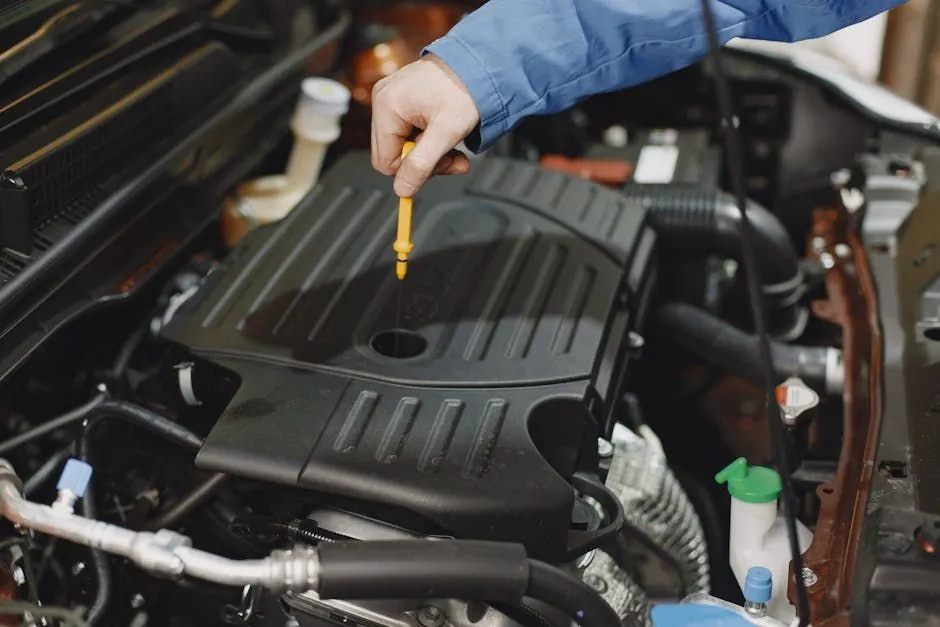
A check engine light, engine misfires, rough idle, and loss of power during acceleration all signal something wrong inside your Porsche’s engine management system. Luxury Motors of South Bay provides Porsche engine diagnostics in Hermosa Beach using dealer-level scan tools that access all 80+ control units to find the actual cause, not just a generic code. From flat-six oil pressure faults and VarioCam timing issues to misfire diagnosis on your 911, Cayenne, or Macan, we pinpoint the problem and get your Porsche back to peak performance.
A full Porsche engine diagnostic scans all 80+ onboard control units, retrieves manufacturer-specific fault codes, monitors live sensor data, and tests individual components to isolate the root cause of the problem. It goes far beyond a basic OBD-II code read.
Modern Porsches are among the most electronically complex vehicles on the road. The engine management system alone communicates with dozens of sensors and actuators, from the VarioCam variable valve timing solenoids to individual cylinder knock sensors. A check engine light might store a single generic code, but the real story is buried in the manufacturer-specific data that only Porsche-level diagnostic software can access.
During a diagnostic session, we pull every stored and pending fault code across all modules, not just the engine. We monitor live data streams including fuel trim values, oxygen sensor readings, timing advance, and boost pressure on turbo models. We test individual components like ignition coils, injectors, and sensors when the data doesn’t point to an obvious answer.
The result is an accurate diagnosis. Not a guess. Not a parts-swap approach. You know exactly what’s wrong and what it costs to fix before we turn a wrench.
Some signs are obvious. A check engine light or reduced power warning on the dash means the ECU has detected a fault and stored a code. Don’t ignore it. Even if the car seems to drive fine, the issue is real and often gets worse.
Other signs are subtler but just as important:
Misfires or rough idle. If the engine stumbles at idle or you feel a hesitation during acceleration, one or more cylinders may not be firing correctly. On a Porsche flat-six, a single misfiring cylinder is immediately noticeable because the engine balance changes.
Unusual engine noises. Ticking, knocking, or rattling sounds that change with RPM often point to mechanical issues that show up in the diagnostic data before they become catastrophic. VarioCam chain tensioner noise on startup is a classic example.
Excessive fuel consumption. If your fuel economy drops noticeably, the engine is likely running rich due to a sensor fault, fuel system issue, or timing problem. The diagnostic data will show exactly which parameters are out of spec.
Loss of power or limp mode. When the ECU detects a critical fault, it restricts engine output to protect the powertrain. This is common with turbo system faults on the Macan and Cayenne, and with oil pressure issues on naturally aspirated models.
Pre-purchase inspection. Before buying a used Porsche, a full diagnostic scan reveals pending issues that a test drive won’t catch. IMS bearing wear indicators, bore scoring patterns, and stored fault histories all show up in the data.
If something feels off, bring it in. A $200 diagnostic is cheaper than a $5,000 repair that could have been caught early.
A standard OBD-II scanner reads generic powertrain codes. Those P-codes cover basic emissions-related faults and nothing else. On a Porsche, that’s maybe 10 percent of the picture.
Porsche vehicles have 80 or more networked control units managing everything from the engine and PDK transmission to the active suspension, stability control, and PASM dampers. Each module stores manufacturer-specific codes and live data that a generic scanner can’t access at all.
Here’s where it matters in practice:
VarioCam and VarioCam Plus timing faults. These variable valve timing systems use oil-pressure-actuated cam phasers and electrically controlled solenoids. A generic scanner might show a “camshaft position” code. The Porsche-level data shows which bank, which solenoid, the actual timing deviation in degrees, and whether the fault is hydraulic or electrical. That’s the difference between replacing a $40 solenoid and tearing into the timing chain.
IMS bearing monitoring. The intermediate shaft bearing on 996 and early 997 flat-six engines is a known failure point. There’s no OBD code for it. Monitoring requires interpreting oil pressure data, engine vibration patterns, and oil sample analysis in context. A shop that doesn’t know what to look for in the Porsche-specific data will miss this entirely.
Oil pressure sensor failures. Porsche flat-six engines use multiple oil pressure sensors, and false readings are common. A generic code says “oil pressure low.” The Porsche data shows the actual pressure value, which sensor is reporting, and whether the reading correlates with RPM and temperature. Sometimes it’s a $50 sensor. Sometimes it’s a real pressure problem. The difference matters.
PDK transmission codes. The dual-clutch transmission stores its own fault codes and adaptation data. A generic scanner sees nothing from this module. Issues with clutch wear, mechatronic unit performance, and shift timing all require manufacturer-level access.
We don’t read a code and replace parts. We find the actual cause.
Porsche engines are built to perform. But performance engineering means tighter tolerances and more complex systems, which means more specific failure patterns by model and engine type.
Oil pressure sensor failures (911, Boxster, Cayman). The flat-six engines use multiple pressure sensors that degrade over time. False low-pressure readings cause warning lights and can trigger limp mode. We verify actual oil pressure with the diagnostic tool before recommending sensor replacement.
VarioCam and VarioCam Plus timing faults. Solenoid failures, chain stretch, and oil passage clogging all affect valve timing. Symptoms range from a check engine light to rough idle and reduced power. The 3.6L and 3.8L flat-six engines in the 997 and 991 are particularly prone to solenoid issues at higher mileage.
IMS bearing wear (996, early 997, Boxster, Cayman). The single-row IMS bearing used in certain model years is a known weak point. Early detection through oil analysis and diagnostic data monitoring can prevent a complete engine failure. We check for this on every pre-purchase inspection and during any diagnostic session on affected models.
Misfire diagnosis. Misfires on Porsche engines can be ignition coils (common on all models), spark plugs (especially if overdue for service), fuel injector faults, or vacuum leaks. The flat-six layout means coil and plug access is tight, and diagnosing which cylinder is misfiring requires cylinder-specific live data.
Bore scoring (Cayenne V8, 997). Cylinder bore scoring is a serious issue on certain Porsche engines, particularly the 4.5L and 4.8L V8 in early Cayenne models and some 997 flat-sixes. Diagnostic indicators include elevated coolant consumption, misfire codes on specific cylinders, and compression test data.
Turbo system faults (Macan, Cayenne Turbo). Wastegate actuator failures, boost leaks, and charge pipe issues all trigger faults on the turbocharged engines. The diagnostic data shows actual vs requested boost pressure, wastegate position, and turbo shaft speed to isolate the component.
Coolant pipe and thermostat failures (Cayenne, Panamera). Plastic coolant pipes on V6 and V8 Cayenne and Panamera models crack and leak, causing overheating codes. We see these frequently on vehicles in the 60,000 to 100,000 mile range.
Porsche dealership diagnostic fees are notoriously high, often $300 or more just to plug in and read codes. That fee rarely includes any actual troubleshooting beyond the initial scan.
At Luxury Motors of South Bay, our diagnostic fee covers a full-system scan, live data analysis, component testing when needed, and a clear explanation of findings with an itemized estimate. If you approve the repair, the diagnostic fee typically applies toward the cost of the work.
Proper diagnosis actually saves money. We’ve seen customers come in after another shop replaced an ignition coil set for $800 when the real problem was a $50 vacuum hose. The misfire came back because the root cause was never found. A thorough diagnostic session prevents that cycle.
We use the same dealer-level tools the Porsche dealership uses. The difference is you talk directly to the technician doing the work, the overhead is lower, and 240 five-star reviews back up the quality.
Affirm financing is available for repairs, so a larger job doesn’t have to wait.
Our diagnostic process is thorough and methodical. Shawn Baker, our ASE Master Technician and owner, personally handles Porsche diagnostics. With over 20 years of experience and more than 20,000 vehicles serviced across all European makes, he’s seen the full range of Porsche engine issues.
Step 1: Symptom review. We start by talking with you about what you’re experiencing. When did it start? Is it constant or intermittent? Does it happen cold, hot, under load, at idle? These details narrow the focus before we even connect the scanner.
Step 2: Full-system scan. We connect dealer-level diagnostic equipment and scan every control unit on the vehicle. All stored, pending, and historical fault codes are retrieved. We look at the full picture, not just the engine module.
Step 3: Live data monitoring. With the engine running, we monitor real-time sensor data including fuel trims, oxygen sensor voltages, timing advance, oil pressure, coolant temperature, and boost pressure on turbo models. Out-of-range values point directly to the problem area.
Step 4: Component-level testing. When codes and live data aren’t conclusive, we test individual components. That might mean testing ignition coil output, measuring fuel injector flow, checking valve timing with the scan tool commanding actuators, or performing a relative compression test.
Step 5: Findings and estimate. We explain what we found, show you the data, and provide an itemized estimate for the repair. No work starts without your approval. No surprises on the bill.
Step 6: Post-repair verification. After the repair, we clear codes, perform a full system re-scan, and road test to confirm the issue is resolved. The Porsche leaves running the way it should.
If your Porsche has a check engine light, warning message, performance issue, or anything that doesn’t feel right, bring it to Luxury Motors of South Bay. We’ll tell you exactly what’s going on and what it takes to fix it.
Luxury Motors of South Bay
505 Pacific Coast Hwy, Hermosa Beach, CA 90254
240 five-star Google reviews
ASE Master Technician owner with 20+ years of Porsche experience
Dealer-level diagnostic scan tools (PIWIS-equivalent)
Bilingual service (English and Spanish)
Affirm financing available
Shopmonkey digital estimates and approvals
240 five-star Google reviews. 20,000+ vehicles serviced. Zero negative reviews.
Porsche quoted me $5,000 for a brake job. I called Shawn, and over the phone, he gave me a price that was a fraction of that.
I recently brought my 2004 Porsche 911 Turbo… What I appreciated most was their honesty; they provided a 25-point inspection… It is rare to find a shop that treats both the customer and the car with this much respect.
I have a Porsche 911 and I am very selective on who I have work on my car. Expert level knowledge on luxury cars.
The dealership claimed it was just a battery issue. When the problem persisted, I turned to Luxury Motors of South Bay and they quickly identified and resolved the actual issue with precision.
These dudes know what they’re doing. I took my Audi in and they treated it like it was their own. Straightforward, honest…
Luxury Motors of South Bay serves the South Bay from our shop at 505 Pacific Coast Hwy, Hermosa Beach, CA 90254.
Bring your vehicle in for a no-pressure inspection. Shawn Baker, ASE Certified Master Technician with over 20 years of experience, leads every diagnosis. You’ll get photos, honest findings, and a clear estimate. No surprises, no upselling.
240 five-star Google reviews from real South Bay drivers. That’s not a tagline. It’s a track record.