
01
Dead or weak battery
Dead or weak battery. The car cranks slowly or not at all. Interior lights are dim. Your clock resets every time you start the engine.
A dead battery, flickering headlights, blown fuses, and a burning plastic smell are all signs your car’s electrical system is failing. Professional electrical diagnostics in Hermosa Beach can pinpoint the root cause, restore vehicle reliability, and prevent costly cascading repairs. Whether it’s an alternator going out, a damaged wiring harness, failing sensors, or corroded ground connections, catching these problems early means reliable starting and working electronics for the long haul.
The most common symptoms include a dead or weak battery, dim or flickering lights, blown fuses, a burning smell, unresponsive electronics, difficulty starting, and an illuminated check engine light.
Any one of these issues could point to something minor. A loose battery terminal, for example. But multiple symptoms happening at once almost always indicate a deeper electrical system failure that’s only going to get worse with time.
Here’s what to watch for:
Dead or weak battery. The car cranks slowly or not at all. Interior lights are dim. Your clock resets every time you start the engine.
Flickering or dim headlights. Lights brighten when you rev the engine and dim at idle. This usually points to the alternator, not the bulbs.
Blown fuses. One blown fuse is normal. Repeated blown fuses in the same circuit mean there’s a short somewhere in the wiring.
Burning plastic smell. This is the one you never ignore. It means something is overheating, and overheating wires start fires.
Unresponsive electronics. Power windows stop working, the infotainment screen goes dark, or seat adjustments freeze. The electrical system is losing its ability to power accessories.
Car won’t start. You turn the key and hear a click, or nothing at all. Could be the battery, the starter motor, or a wiring issue between the two.
Check engine light. Modern cars rely on dozens of sensors tied to the ECU. When the electrical system acts up, the check engine light is often the first dashboard warning you’ll see.
If you’re experiencing two or more of these symptoms at the same time, the problem isn’t going to fix itself.
A dead battery and a failing alternator produce similar symptoms, which is why so many drivers replace the battery only to have the same problem a week later.
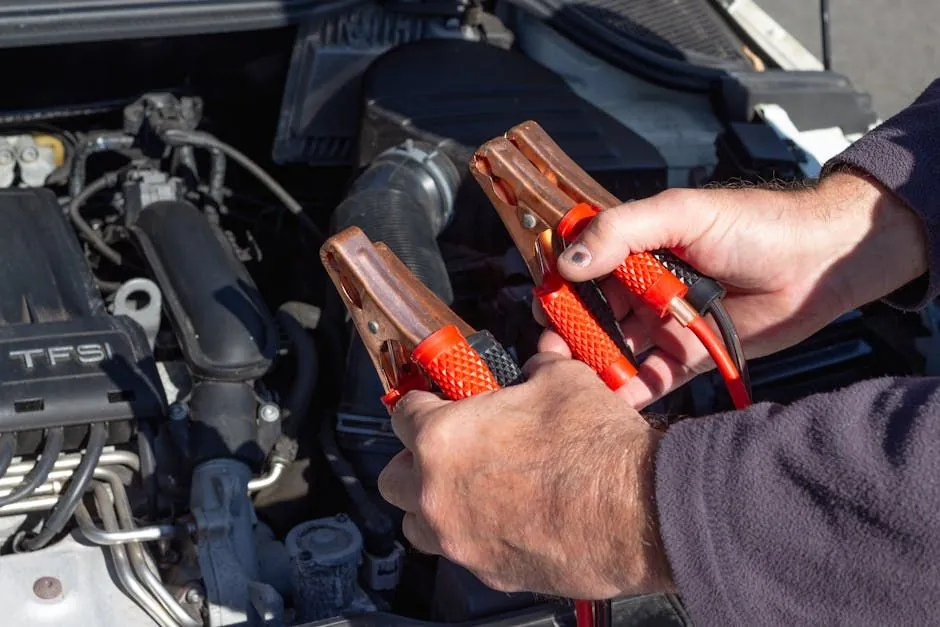
Here’s the quick test. If you jump-start the car and it runs fine for days before dying again, the battery is the problem. If the car dies again within minutes of removing the jump cables, or if the lights dim while driving, the alternator is failing.
The battery stores electrical energy. The alternator generates it while the engine runs. When the alternator fails, it stops recharging the battery, which drains everything until the car won’t start. Replacing the battery without testing the alternator is one of the most common (and most expensive) misdiagnoses in auto electrical repair.
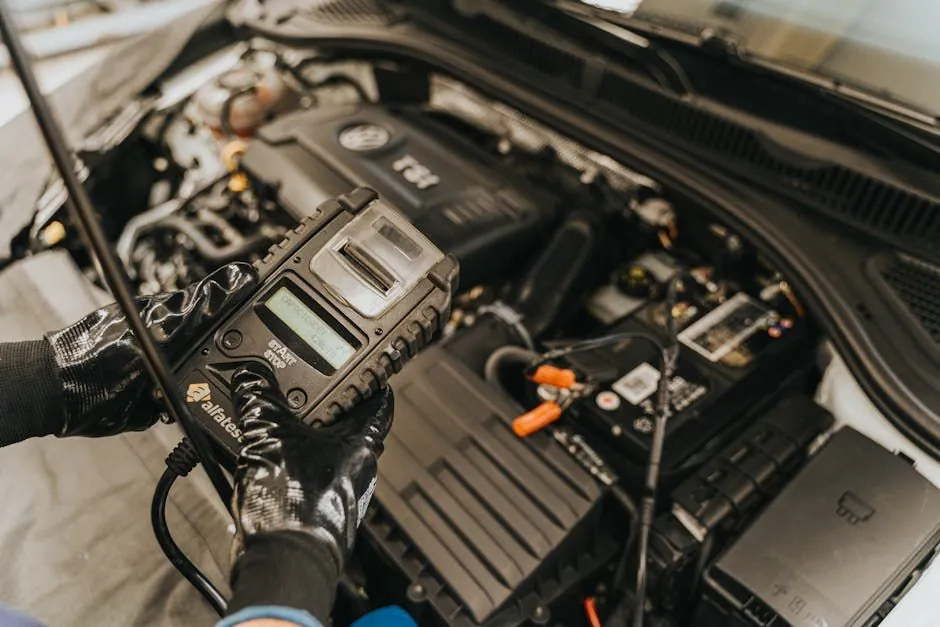
A proper diagnostic code reading can confirm which component is actually failing. It takes about 15 minutes with the right equipment. The wrong guess can cost you $200 to $400 in unnecessary parts.
A burning plastic smell coming from under the dash, near the fuse box, or from the engine bay is a fire hazard. Full stop.
Wiring problems cause this. When a wire’s insulation breaks down, or when a short circuit forces too much current through a wire that wasn’t designed for it, the plastic coating melts. That’s the smell. If you keep driving, the wire gets hotter. Hotter wires can ignite nearby materials.
Common causes include:
A wiring harness rubbing against a metal bracket until the insulation wears through
An aftermarket accessory that was wired incorrectly
A corroded connector creating resistance and heat
A failing blower motor or power window motor drawing too much current
If you smell burning plastic, pull over when it’s safe to do so. Don’t wait to “see if it goes away.” It won’t. The wire that’s melting today becomes the fire that ruins your car tomorrow.
Flickering headlights or dim interior lights while the engine is running almost always point to the charging system. Specifically, the alternator or the connections between the alternator, battery, and ground.
When the alternator can’t keep up with electrical demand, voltage drops. Your headlights dim because they’re getting 11 volts instead of 14. Power windows move slower. The radio cuts out momentarily.
Ground connections are the overlooked culprit here. Every electrical circuit in your car needs a clean path back to the battery’s negative terminal. Over time, ground straps corrode, bolt connections loosen, and resistance builds up. The result looks exactly like alternator failure, but the fix is much simpler and cheaper.
This problem is progressive. It starts with a barely noticeable flicker and ends with your car stranded in a parking lot six months later. The earlier you diagnose it, the less it costs.
German luxury vehicles run significantly more complex electrical systems than most cars on the road. A modern BMW or Porsche might have 70 to 100 individual control modules, each communicating on a CAN bus network. When one module glitches, it can trigger fault codes across the entire system.
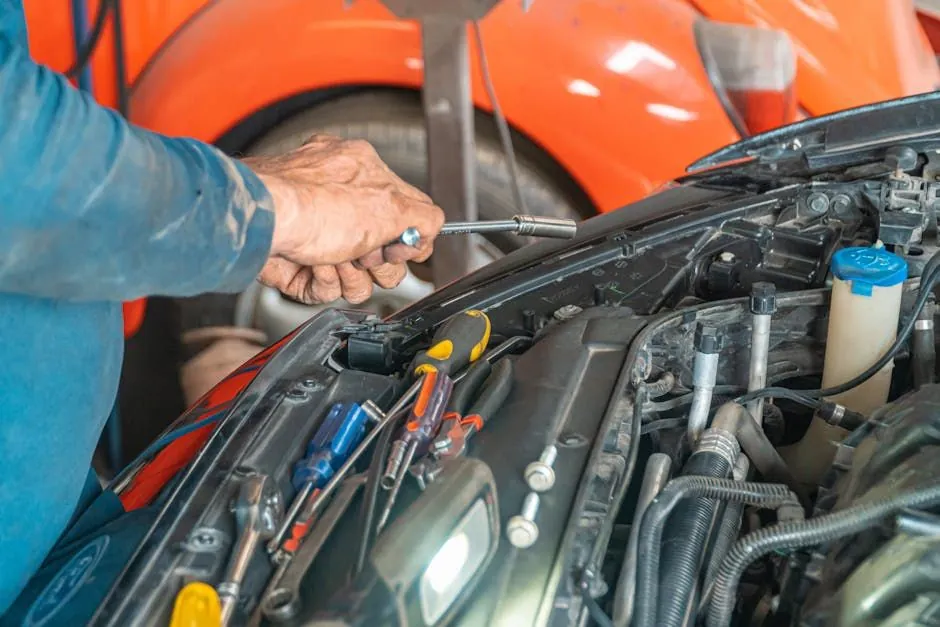
This complexity is why generic OBD scanners aren’t enough. They’ll read basic engine codes, but they can’t access the body control module, the adaptive headlight controller, or the transmission computer. You need dealer-level diagnostic scan tools, the same equipment authorized dealerships use, to see what’s actually happening.
At Luxury Motors of South Bay, we run the same diagnostic tools the BMW, Porsche, Audi, and Mercedes dealerships use. That means we can read every module, pull every stored fault code, and trace electrical problems to the specific sensor, wiring harness, or ECU that’s causing the issue. Without that access, you’re guessing. And guessing gets expensive.
This is one reason so many German car owners get bounced from shop to shop. The first mechanic replaces the battery. The second replaces the alternator. The third says “it might be a wiring issue” but can’t pinpoint where. The right scan tools eliminate that guesswork on the first visit.
Some electrical symptoms are annoying. Others are dangerous. Knowing the difference matters.
Pull over immediately if you notice:
A burning plastic smell anywhere in the vehicle
Smoke coming from under the dash or hood
Complete loss of headlights while driving at night
The battery warning light and temperature light illuminating at the same time
Repeated blown fuses
Flickering lights that are getting worse
Multiple electronics failing at the same time
The car struggling to start more than once
A single blown fuse that doesn’t repeat
One accessory (like a power window) that’s intermittently slow
A check engine light with no other symptoms
Schedule diagnostics this week if you notice:
Monitor and schedule when convenient:
The cost of early electrical diagnostics is almost always a fraction of the cost of the repair you’ll need if you wait. A $150 diagnostic visit today can prevent a $2,000 wiring harness replacement six months from now. Catching the problem early means lower repair costs and a car that actually starts when you need it to.
Professional electrical diagnostics isn’t just plugging in a scanner and reading codes. That’s step one. Here’s what a thorough diagnosis actually looks like.
Step 1: Full system code scan. Every control module in the vehicle gets scanned for stored and pending fault codes. On German vehicles, that can mean reading 50+ modules.
Step 2: Battery and charging system test. Load testing the battery, checking alternator output voltage and amperage, and verifying the charging circuit from alternator to battery.
Step 3: Visual wiring inspection. Looking for damaged insulation, corroded connectors, loose ground connections, and signs of overheating. This is where experience matters. Shawn Baker, our ASE Certified Master Technician, has diagnosed electrical problems on over 20,000 vehicles in his 20+ year career. Pattern recognition catches what scanners miss.
Step 4: Circuit testing. Using a multimeter and oscilloscope to trace voltage drops, verify sensor readings, and pinpoint exactly where a circuit is failing.
Step 5: Documentation and estimate. Photos of the problem, a clear explanation of what’s wrong, and an itemized estimate before any work begins. No surprises.
Luxury Motors of South Bay runs this full diagnostic process on every vehicle. We don’t guess, we don’t shotgun parts at the problem, and we don’t charge you for repairs you don’t need.
If your car is showing any of the symptoms on this page, schedule your electrical diagnostics appointment today. You can also learn more about our full electrical diagnostics service or see how we handle German car electrical systems specifically.
Luxury Motors of South Bay | 505 Pacific Coast Hwy, Hermosa Beach, CA 90254 | 310-504-0089
240 five-star Google reviews. 20,000+ vehicles serviced. Zero negative reviews.
Porsche quoted me $5,000 for a brake job. I called Shawn, and over the phone, he gave me a price that was a fraction of that.
I recently brought my 2004 Porsche 911 Turbo… What I appreciated most was their honesty; they provided a 25-point inspection… It is rare to find a shop that treats both the customer and the car with this much respect.
I have a Porsche 911 and I am very selective on who I have work on my car. Expert level knowledge on luxury cars.
The dealership claimed it was just a battery issue. When the problem persisted, I turned to Luxury Motors of South Bay and they quickly identified and resolved the actual issue with precision.
These dudes know what they’re doing. I took my Audi in and they treated it like it was their own. Straightforward, honest…
Luxury Motors of South Bay serves the South Bay from our shop at 505 Pacific Coast Hwy, Hermosa Beach, CA 90254.
Bring your vehicle in for a no-pressure inspection. Shawn Baker, ASE Certified Master Technician with over 20 years of experience, leads every diagnosis. You’ll get photos, honest findings, and a clear estimate. No surprises, no upselling.
240 five-star Google reviews from real South Bay drivers. That’s not a tagline. It’s a track record.