
01
City driving with
City driving with frequent stop-and-go traffic (South Bay commuters, this is you)
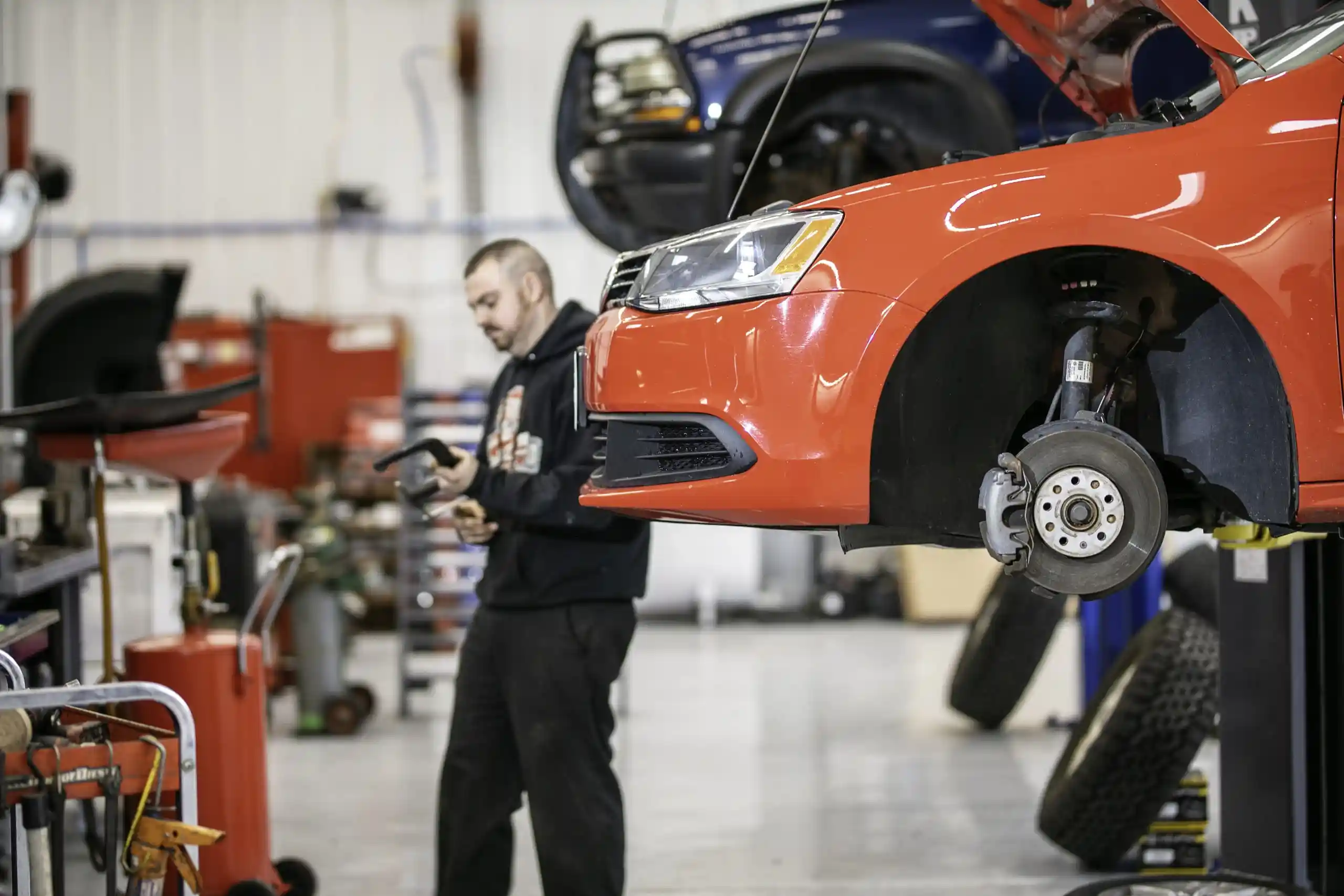
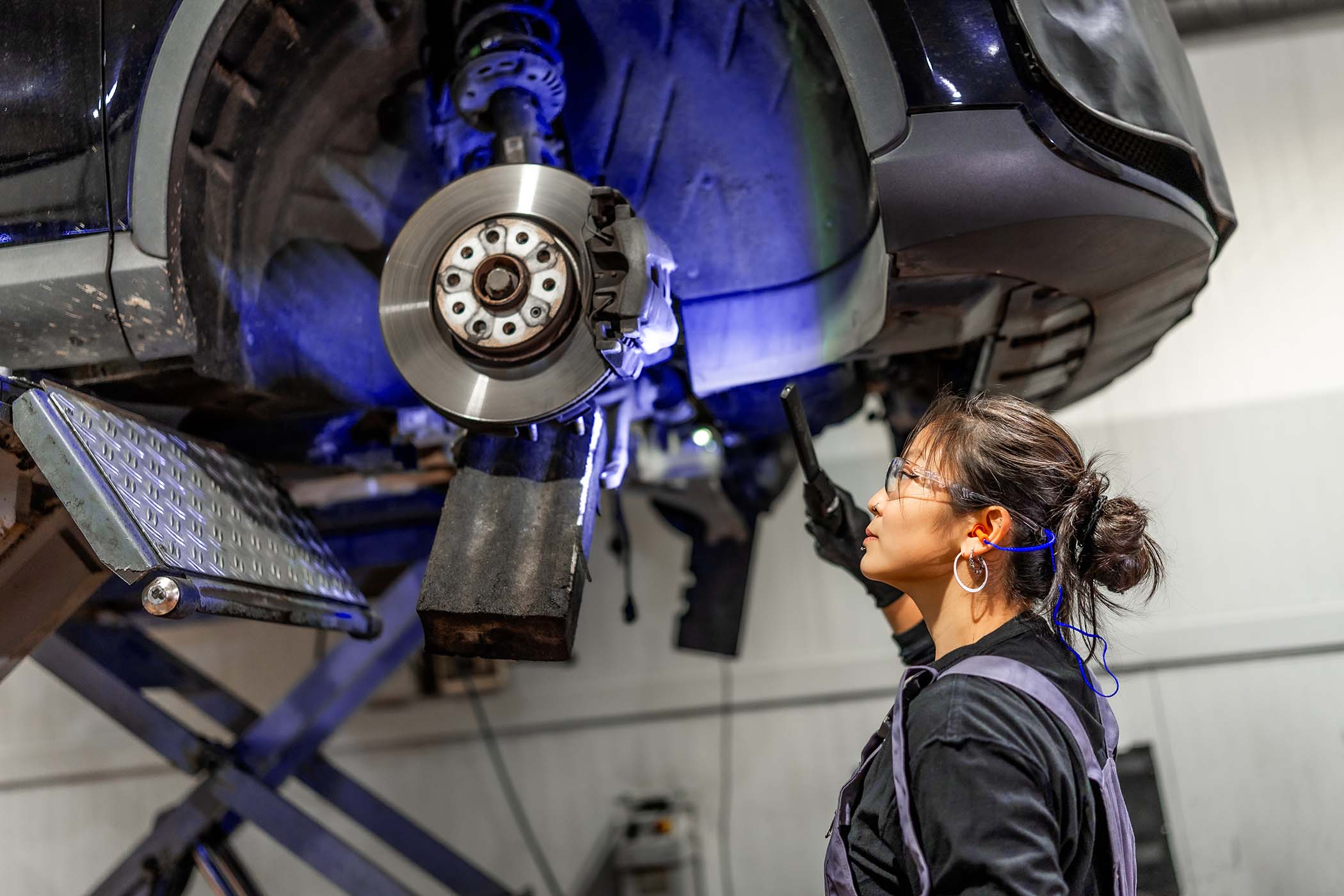
Squealing sounds every time you stop, a grinding noise that gets worse by the week, or a brake pedal that feels soft and spongy under your foot. These are your car telling you something is wrong with the brake system. If you’re noticing any of these symptoms on your BMW, Porsche, or Mercedes in Hermosa Beach, a brake inspection can catch worn brake pads, damaged rotors, or a brake fluid leak before a small repair turns into a major safety problem.
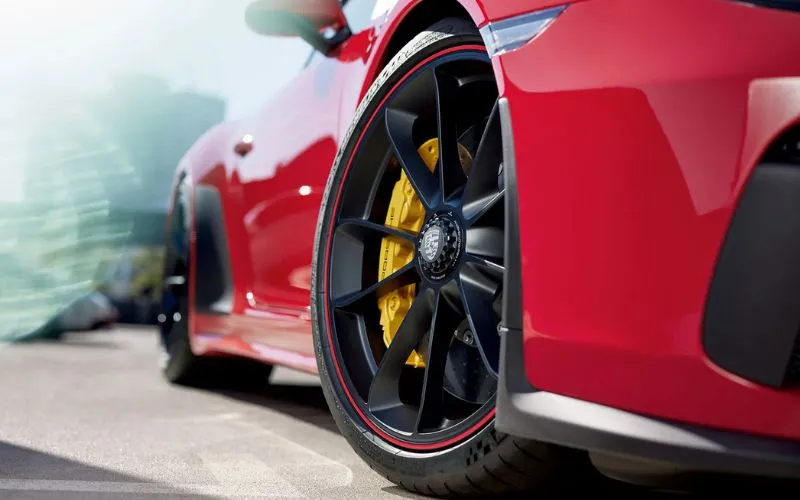
The most common signs are squealing or squeaking when braking, grinding noises, a spongy brake pedal, the car pulling to one side, vibration through the steering wheel, and a brake warning light on your dashboard.
Some of these are early warnings. Others mean you should stop driving and get to a shop. Here’s what each one actually means and how urgently you need to act.
A high-pitched squeal when you press the brake pedal is usually the wear indicators doing their job. Most brake pads have a small metal tab built into them. When the pad wears down to a certain thickness, that tab contacts the rotor and creates the squeal. It’s an intentional design feature, basically an alarm telling you the pads are getting thin.
On German cars, the wear indicator system is often electronic rather than mechanical. Your BMW or Mercedes has a sensor embedded in the brake pad that sends a signal to the dash when the pad hits minimum thickness. You might see a warning message before you ever hear a sound.
Not every squeak means trouble, though. Brakes can squeal briefly in the morning when moisture sits on the rotors overnight. New brake pads sometimes squeak for the first few hundred miles while they bed in. Cold weather can cause temporary noise too.
The difference: if the squeal happens consistently every time you brake and gets louder over days or weeks, that’s wear. Get it checked. If it happens once in the morning and goes away, you’re probably fine.
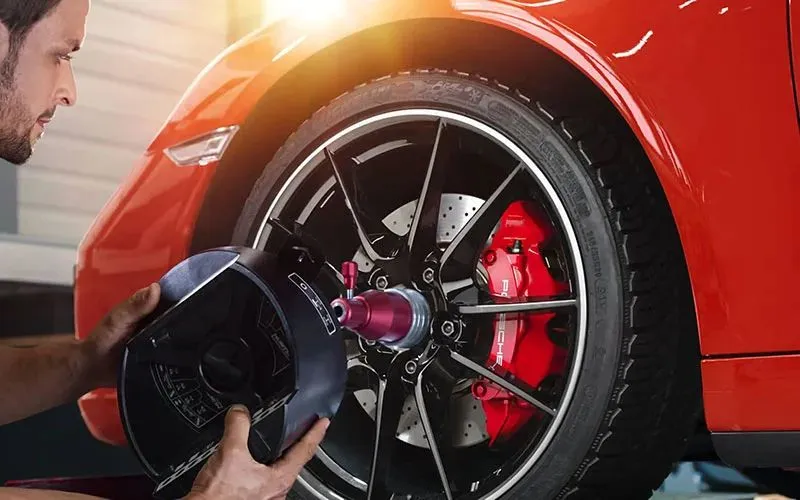
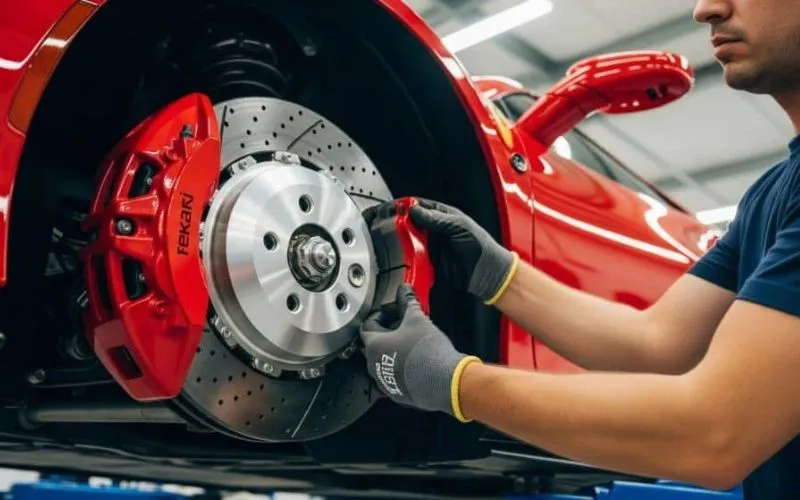
Grinding is more urgent than squealing. A lot more urgent.
When brakes grind, it usually means the brake pad material has worn completely through. You’re hearing metal backing plate grinding directly against the brake rotor. Every time you stop, the rotor surface is being chewed up.
This is expensive territory. Brake pad replacement on a German car might cost $300-$600 per axle. But once grinding damages the rotors, you’re looking at $800-$1,500 or more for pads and rotors together. If you keep driving, the rotors can score so deeply that they damage the calipers too. Now you’re into a $2,000-$3,000 brake repair that started as a $400 job.
Beyond the cost, grinding brakes are a safety issue. Your stopping distance increases dramatically when the pad material is gone. In an emergency stop, the difference between worn pads and bare metal can be several car lengths.
If your brakes are grinding, don’t wait for your next scheduled service. Get a brake inspection as soon as possible.
When you press the brake pedal and it feels mushy, sinks further than normal, or slowly drops toward the floor, something is wrong with the hydraulic system.
The most common causes:
Air in the brake lines. Brake fluid is incompressible, which is why hydraulic brakes work. Air IS compressible. Even a small air bubble in the line makes the pedal feel soft because the air squishes instead of transmitting force to the calipers.
Brake fluid leak. Look under your car and near each wheel for clear or yellowish fluid. A leaking brake line, caliper seal, or wheel cylinder reduces hydraulic pressure. This gets worse over time and can eventually lead to brake failure.
Failing master cylinder. The master cylinder converts your pedal pressure into hydraulic force. When the internal seals wear out, fluid bypasses them instead of being pushed to the brakes. The pedal sinks, and stopping power drops.
A spongy pedal is always worth immediate attention. Unlike squealing pads that give you weeks to schedule a repair, a hydraulic issue can progress to partial or complete brake failure. Don’t drive across town to get a second opinion. Go to the nearest qualified shop.
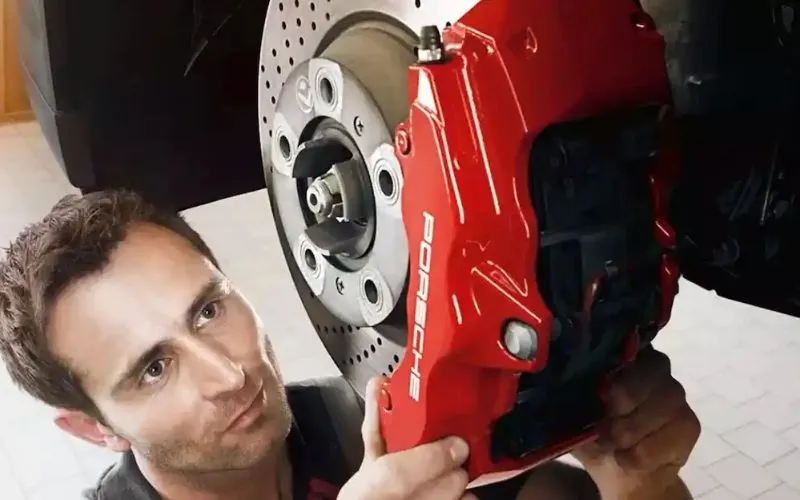
If the car drifts left or right when you hit the brakes, most people assume it’s an alignment problem. Sometimes it is. But if it only happens during braking, the brake system is the likely culprit.
A stuck brake caliper is the most common cause. One side is applying more force than the other, which pulls the car toward the side with more braking force. Calipers stick when the slide pins corrode or when the piston seals deteriorate, both common on German cars exposed to coastal air in the South Bay.
Uneven brake pad wear can cause the same symptom. If one side wore down faster than the other (often because of a partially stuck caliper), the braking force is unbalanced.
Less commonly, a collapsed brake hose can restrict fluid flow to one caliper. The hose looks fine from the outside, but the inner lining has deteriorated and acts like a one-way valve.
Any of these need diagnosis. A brake inspection will reveal which side is the problem and what’s causing it.
The damage is progressive and each stage gets more expensive.
Stage 1: Worn pads. The brake pad material is thin but still there. Squealing starts. This is the cheapest repair: pad replacement only. On a German car, $300-$600 per axle for quality parts and labor.
Stage 2: Metal on metal. Pads are gone. Backing plates grind on rotors. Rotor surfaces get scored and damaged. Now you need pads AND rotors. Cost jumps to $800-$1,500 per axle.
Stage 3: Caliper damage. Severely scored rotors and excessive heat damage the caliper pistons and seals. You’re now replacing pads, rotors, AND calipers. $1,500-$3,000 per axle on a BMW or Mercedes.
Stage 4: Complete brake failure. Extreme neglect. Heat warps rotors beyond use, fluid boils, hydraulic system fails. This is a safety emergency and a repair bill that makes the earlier stages look like a bargain.
German car brake components are precision-engineered and more expensive than domestic equivalents. A BMW M-Sport brake caliper costs three to four times what a Toyota caliper costs. Catching pad wear early isn’t just smart maintenance. It’s the single best way to keep brake repair costs manageable.
There’s no universal answer because driving habits matter more than mileage.
General ranges: front brake pads on most German cars last 25,000-50,000 miles. Rear pads typically last longer, 40,000-70,000 miles. But these are rough guidelines, not guarantees.
Factors that shorten pad life significantly:
City driving with frequent stop-and-go traffic (South Bay commuters, this is you)
Aggressive driving habits
Towing or carrying heavy loads
Hilly terrain
Performance-oriented brake pads (they grip harder but wear faster)
Highway driving with minimal braking
Smooth, gradual braking habits
Lighter vehicle weight
Factors that extend pad life:
The best approach is a visual brake inspection every 15,000-20,000 miles or once a year. A qualified tech can measure pad thickness and rotor condition in minutes. It’s cheap insurance against the escalating repair costs of ignored brake wear.
At Luxury Motors of South Bay, we check brake condition during every service visit, even if you’re in for something else. It takes two minutes and it’s saved plenty of our customers from expensive surprises.
Hearing something when you brake? Don’t guess. Call Luxury Motors of South Bay at 310-504-0089 or stop by 505 Pacific Coast Hwy, Hermosa Beach, CA 90254. We’ll inspect your brakes and tell you exactly what’s going on.
240 five-star Google reviews. 20,000+ vehicles serviced. Zero negative reviews.
Porsche quoted me $5,000 for a brake job. I called Shawn, and over the phone, he gave me a price that was a fraction of that.
I recently brought my 2004 Porsche 911 Turbo… What I appreciated most was their honesty; they provided a 25-point inspection… It is rare to find a shop that treats both the customer and the car with this much respect.
I have a Porsche 911 and I am very selective on who I have work on my car. Expert level knowledge on luxury cars.
The dealership claimed it was just a battery issue. When the problem persisted, I turned to Luxury Motors of South Bay and they quickly identified and resolved the actual issue with precision.
These dudes know what they’re doing. I took my Audi in and they treated it like it was their own. Straightforward, honest…
Luxury Motors of South Bay serves the South Bay from our shop at 505 Pacific Coast Hwy, Hermosa Beach, CA 90254.
Bring your vehicle in for a no-pressure inspection. Shawn Baker, ASE Certified Master Technician with over 20 years of experience, leads every diagnosis. You’ll get photos, honest findings, and a clear estimate. No surprises, no upselling.
240 five-star Google reviews from real South Bay drivers. That’s not a tagline. It’s a track record.